Organ regeneration by manipulation of gene
Welcome to my blog, dear readers. Recently I was looking through modern discoveries in biology and medicine, and found an interesting article published by scientists at Edinburgh. But before I start, I want to say that in the medical field, there are many areas for research, but not all of them are developing rapidly or promising for humanity. However, that is why today we will focus on regenerative medicine, which is experiencing a period of rapid development. The point is that a group of scientists from the University of Edinburgh managed to completely regenerate an organ of the experimental animal.

Such an event can already be considered as a breakthrough for the scope of regenerative medicine, but researchers do not intend to stop there. Essentially, thymus was selected as the object of regeneration. The examined organ is located next to the heart and is part of the immune system. Its structure is inherently such that the organ develops before puberty of the organism (in this case we consider human), and with aging, the size of the thymus is reduced, thereby reducing the immune system.
The recovery process of thymus: animal testing
Naturally, in case of animals, the situation is slightly different. During the experimental procedure on the body of animal, scientists have increased protein level of FOXN1, which is produced by cells of thymus. Through this protein, the process of activation and deactivation of genes occurs. And these genes are primarily responsible for the functioning of the immune system. Surprisingly, increasing the concentration of FOXN1, "reset" thymus cells in experimental animal, whose age can be compared with old man.
"The greatest interest in our discovery is that the regeneration of the whole body of living organism can be achieved by manipulation of only one protein. It is likely that similar manipulations with proteins of other species will allow to provide regenerative effect on other organs".
- Dr. Rob Buckle, head of the Center for Regenerative Medicine
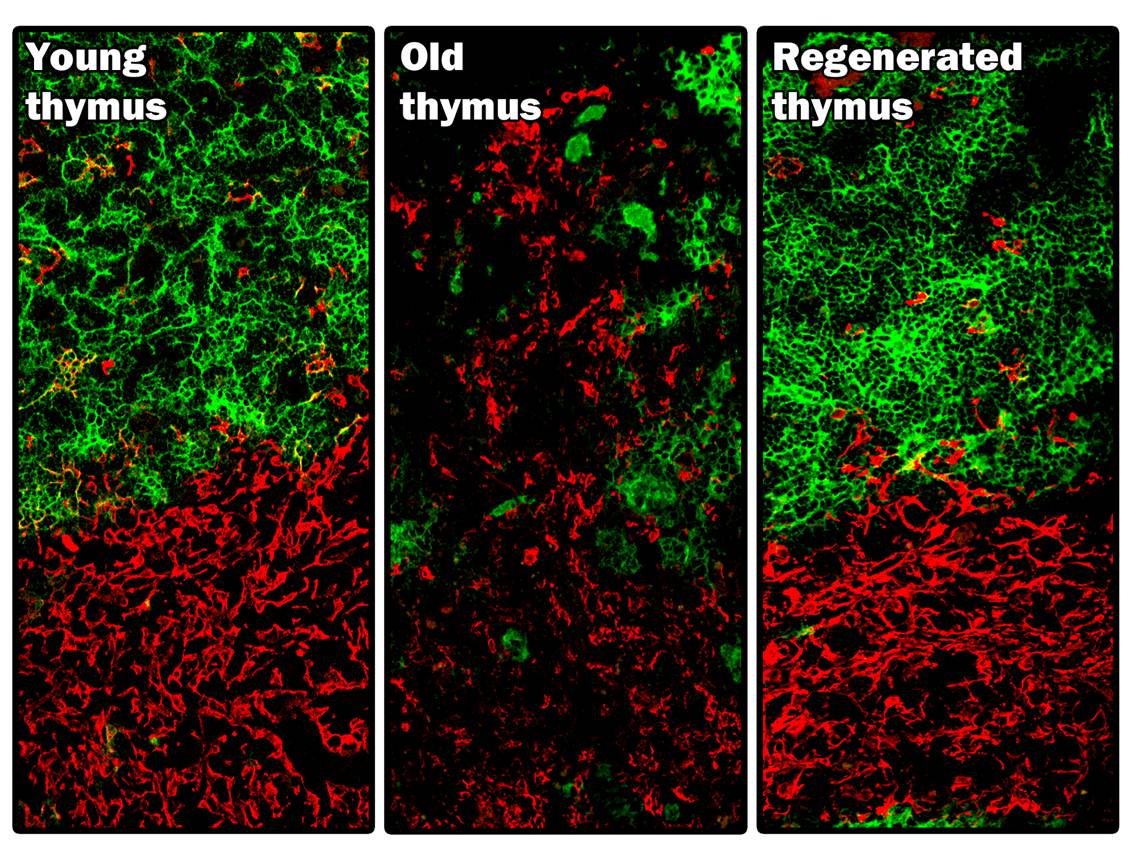
As a consequence - thymus regenerated and re-acquired the structure and size comparable to the thymus of young individuals. However, in addition to regeneration of its size, thymus regained ability to produce T-cells, which is the main function of the organ. It is worth noting that the T-cells are key players in suppressing infections of organism.
The essence of the experiment
One of the main goals of regenerative medicine is to use the organism's own regenerative mechanisms to force the body to fight the progressive disease or treat the effects of various kinds of diseases. Undoubtedly, such an experiment will positively affect the development of the industry in general and in the future will provide the necessary data to help sick people whose diseases are associated with disorders of the immune system. However, as always in such cases, the development and subsequent experiments requires time. The new technique will take a number of tests and modifications to minimize possible risks and side effects.

No comments:
Post a Comment